
Get Your Instant Quote Now!
Get Started
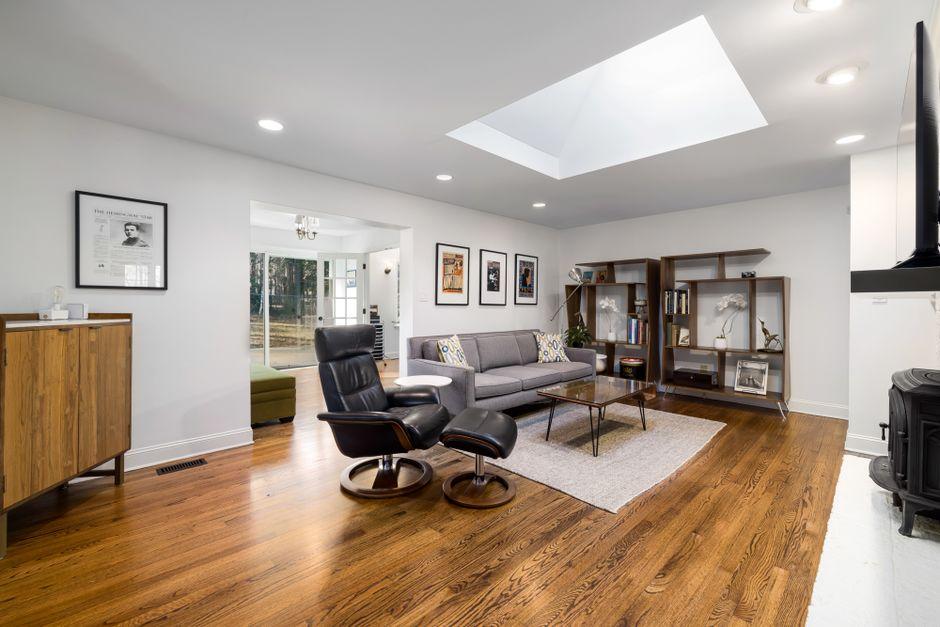
Skylights are roof-mounted windows that bring natural light — and sometimes fresh air — directly into your home through the ceiling.
Here's a quick overview of what most homeowners want to know:
Question Quick Answer What are skylights? Windows installed in the roof to let in daylight and ventilation Main types Fixed, operable, tubular, retractable Average cost $800–$2,500+ installed, depending on type Energy savings Can cut lighting energy use by up to 80% Lifespan 20–30 years with proper maintenance Home value boost Typically 3–5% increase
Whether you're trying to brighten a dark kitchen, reduce your energy bill, or add a stunning design feature to your Metro Atlanta home, skylights are one of the most effective upgrades you can make to your home's exterior.
But they're not a simple purchase. The wrong type, poor placement, or a rushed installation can lead to leaks, heat loss, and costly repairs down the road. This guide walks you through everything — from choosing the right skylight for your roof and climate, to installation best practices, to keeping it performing for decades.
I'm Matt Lopez, owner of Matt's Exteriors, and over nearly two decades of exterior remodeling work across Metro Atlanta, my team has installed and replaced skylights on hundreds of homes across a wide range of roof types and ceiling configurations. We'll share what we've learned so you can make a confident, well-informed decision.
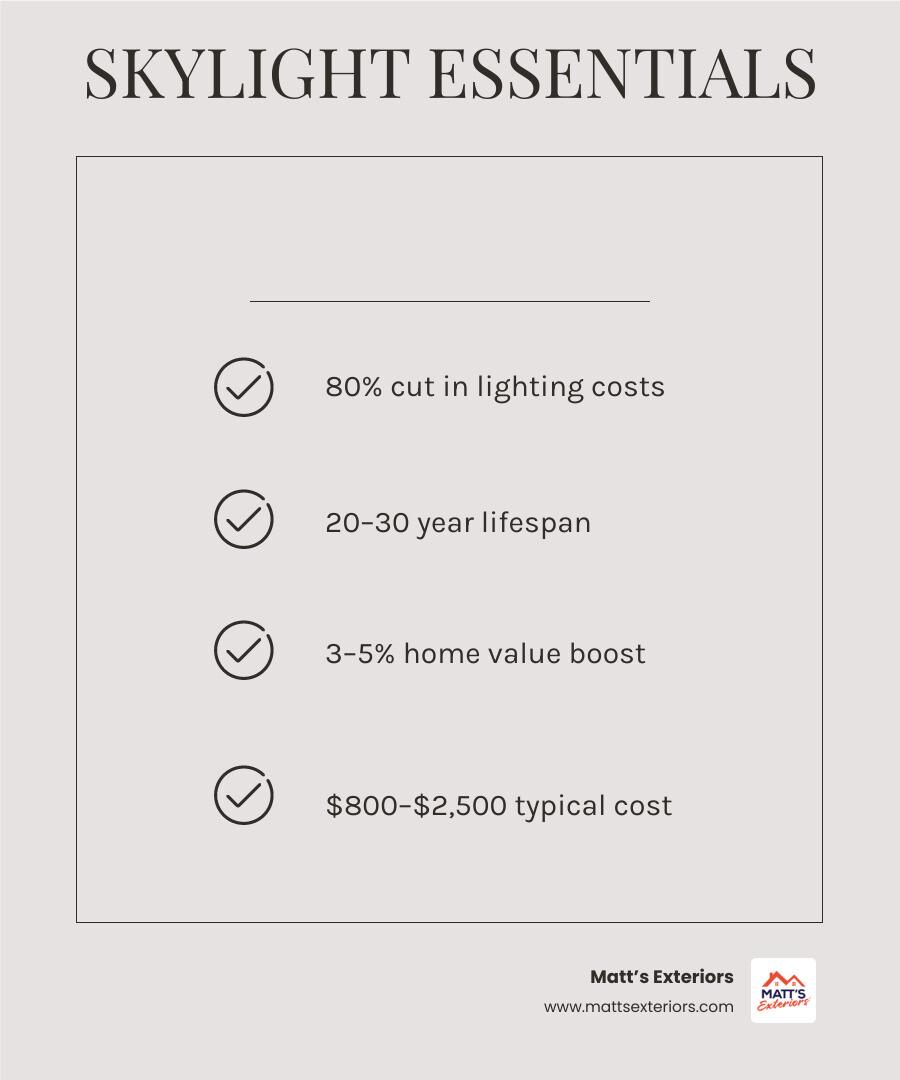
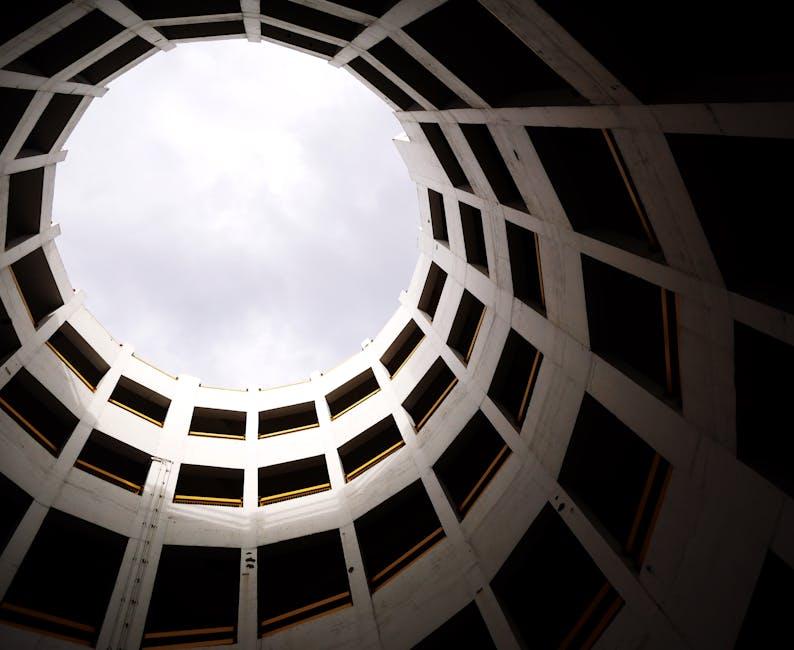
When we talk about skylights today, we aren’t talking about the leaky plastic bubbles of the 1970s. Modern technology has transformed these roof windows into high-performance assets for your home. According to the Department of Energy, daylighting is one of the most effective ways to reduce the need for artificial lighting. In fact, toplighting (light coming from above) is three to ten times more efficient than sidelighting from traditional windows, even on those gray, overcast Georgia afternoons.
Beyond just "seeing better," adding skylights is a move toward sustainable building. By flooding your home with natural light, you can reduce your total energy costs by up to one-third in some buildings. Furthermore, there is a tangible financial benefit: a well-installed skylight system can increase your home's resale value by 3% to 5% by improving aesthetic appeal and perceived space. It’s a similar logic to the benefits of energy efficient windows, where the investment pays for itself through utility savings and home equity.
In the humid subtropical climate of Metro Atlanta, energy efficiency is everything. When selecting skylights, you need to look closely at the NFRC (National Fenestration Rating Council) labels. Two numbers matter most:
Choosing energy efficient windows in Atlanta involves balancing these ratings to ensure your home stays cool in July without losing all its warmth in January. Modern units often feature argon gas between panes and Low-E coatings to reflect infrared light, keeping the heat where it belongs.
We often see homeowners in areas like Marietta or Roswell install skylights for the "wow factor," but they soon realize the health benefits are just as significant. Natural light helps regulate our circadian rhythms and melatonin production, which improves sleep quality.
From a design perspective, a skylight can make a small, cramped bathroom or a narrow hallway feel twice as large. By opening up the ceiling to the sky, you remove the "closed-in" feeling of traditional drywall. It’s a psychological trick that makes your home feel more "full of life," as many interior designers like to say.
Not every roof is built the same, and not every room needs the same type of light. Choosing the right category is the first step in our checklist.
Type Best For Ventilation? View? Fixed Kitchens, living rooms, high ceilings No Yes Operable Bathrooms, kitchens, attics Yes Yes Tubular Hallways, closets, small bathrooms No No Retractable Large sunrooms or custom builds Yes Yes
If your home has a flat or very low-slope roof—common in some modern architectural styles in Atlanta or Buckhead—you’ll likely need a fixed flat roof skylight. These units often feature curved glass or specialized "curb mount" designs to ensure water doesn't pool on the glass. Water diversion is critical here; without a slight pitch or a curved surface, rain can sit on the unit, increasing the risk of seal failure over time.
Commonly called "Fresh Air" skylights, operable models are game-changers for moisture-prone areas. In a bathroom or kitchen, steam and odors naturally rise. An operable skylight uses the "stack effect"—as hot air escapes through the roof, it pulls cooler air in through lower windows.
This is very similar to the functionality we discuss when installing hopper windows, where ventilation is the primary goal. Many modern operable skylights are solar-powered and feature rain sensors that automatically close the unit at the first sign of a Georgia thunderstorm.
Before we cut a hole in your roof, we have to talk about where it goes. The orientation of your roof determines how much heat you'll gain. For example, a south-facing skylight provides the most consistent light but can also lead to significant heat gain in the summer if not properly shaded.
In our region, the optimum slope for a south-facing skylight to balance winter heat and summer cooling is typically your latitude plus 5 to 15 degrees.
When adding windows to a house, we always look at the surrounding landscape. If you have large deciduous trees, they can provide natural shade in the summer while letting light through in the winter once the leaves fall.
The "glass" in your skylight isn't just standard window glass. We recommend tempered or laminated safety glass. Laminated glass is particularly important because if it breaks, the interlayer holds the fragments together—preventing glass from falling into your living room.
If you are replacing windows in your house, you might already be familiar with Low-E coatings. These microscopic layers of metal reflect heat while letting light through. For skylights, these coatings are essential to prevent your living room from feeling like a greenhouse.
This is where the DIY road usually ends. Installing skylights involves structural changes to your roof and meticulous waterproofing. At Matt’s Exteriors, we’ve seen plenty of "handyman specials" where the skylight was simply plopped into a hole with a bit of caulk. That is a recipe for disaster.
A curb mount skylight is essentially a raised frame (the curb) built onto the roof deck. The skylight sits on top of this frame like a lid on a shoebox. This design is superior for leak prevention because it lifts the "seam" of the window above the water-flow level of the roof. Curb mount skylight installation requires precise flashing—the metal sheeting that directs water around the unit—to ensure a 100% watertight seal.
One major issue we see is the lack of proper insulation in the "light shaft"—the tunnel between your roof and your ceiling. If this shaft isn't air-sealed and insulated, you’ll deal with heavy condensation and massive energy loss.
Furthermore, a skylight fixed into a roof requires cutting through rafters. This requires the installation of structural headers to redistribute the weight of the roof. Without these, your roof could sag over time, leading to structural failure and, you guessed it, more leaks.
A high-quality skylight should last between 20 and 30 years—roughly the lifespan of a standard asphalt shingle roof. However, they aren't "set it and forget it" fixtures.
To get the full 30 years out of your skylight, follow this simple annual checklist:
If you see water, don't panic immediately—it might not be a leak. In bathrooms, "dripping" is often just condensation from a hot shower hitting the cold glass. Improving ventilation or adding a vapor barrier can often fix this. However, if you see water staining on the drywall of the light shaft, you likely have a flashing issue. We provide expert skylight repair across Metro Atlanta to address these issues before they rot your roof decking.
In 2026, costs remain relatively stable but vary by complexity. A basic fixed skylight usually ranges from $800 to $1,500 including professional installation. Operable or solar-powered skylights typically cost between $1,200 and $2,500. If you are adding a completely new "cut-in" (where no window existed before), expect the price to be on the higher end due to the structural work and drywall finishing required.
While the terms are often used interchangeably, there is a technical difference. A skylight is typically installed in a high ceiling and is not meant to be reached by hand. A roof window is usually installed within reach, often in a finished attic or loft, and is large enough to serve as an emergency exit (egress). Roof windows usually pivot open and are designed for both view and ventilation.
In most Metro Atlanta jurisdictions—including Alpharetta, Marietta, and Cumming—a building permit is required because you are altering the structural integrity of the roof (cutting rafters). Professional installers like us handle the permit process to ensure your installation meets local building codes and safety standards.
Adding skylights to your home is a brilliant way to transform a dark space into a vibrant, energy-efficient sanctuary. From the massive reduction in lighting costs to the boost in your home's resale value, the benefits are clear. However, the success of your project hinges on choosing the right materials and ensuring a flawless installation.
At Matt’s Exteriors, we’ve spent since 2007 building a reputation for high-quality workmanship and exceptional customer care. As a family-owned company that has completed over 12,000 projects across Metro Atlanta, we know exactly what it takes to keep a roof watertight in the Georgia climate. Whether you're in Peachtree City, Johns Creek, or anywhere in between, we are here to help you bring the light in.
Ready to brighten up your home? Schedule your professional skylight consultation today and let’s see what a little natural light can do for your space.